
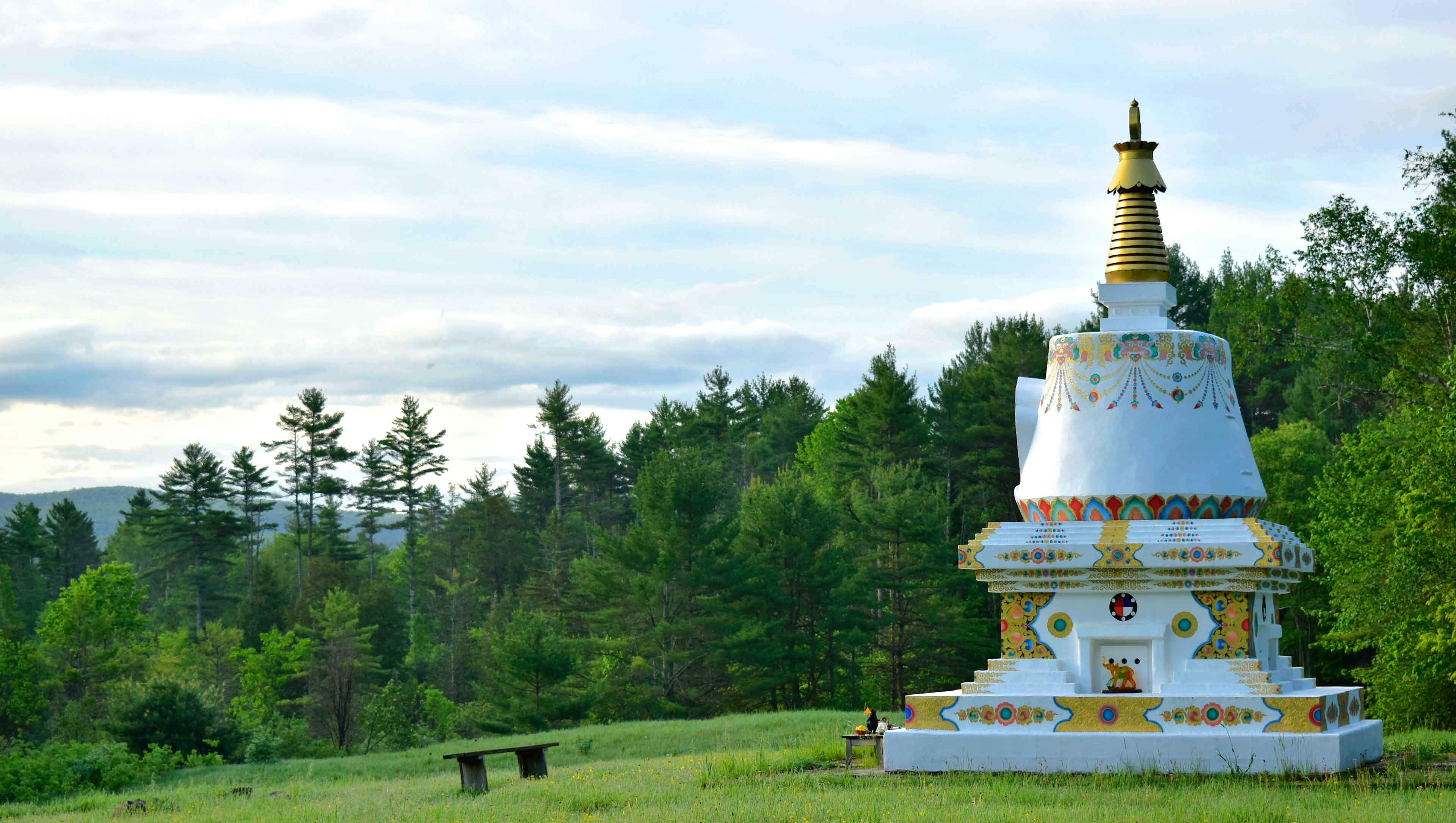
Fulfilling the Vision for the Purkhang
A Stupa for the Vidyadhara
Fulfillment of a Wish
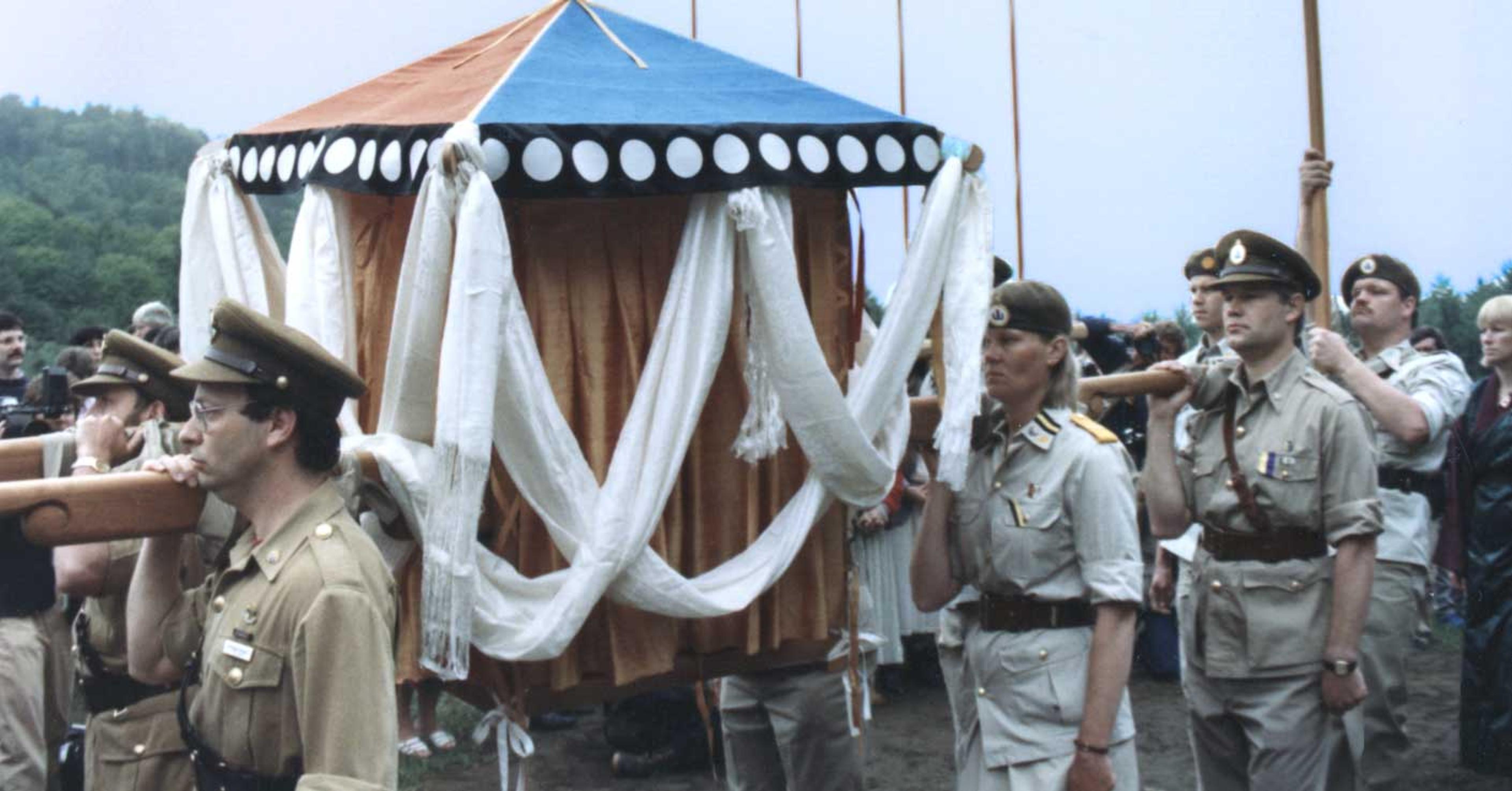
In the Upper Meadow at Karmê Chöling stands the Purkhang, the ritual cremation structure built for Chögyam Trungpa Rinpoche. On May 26, 1987, more than 2,000 students, teachers, friends, and dignitaries gathered here for his cremation, on the very land where he taught, practiced, and built a community that continues to flourish today.
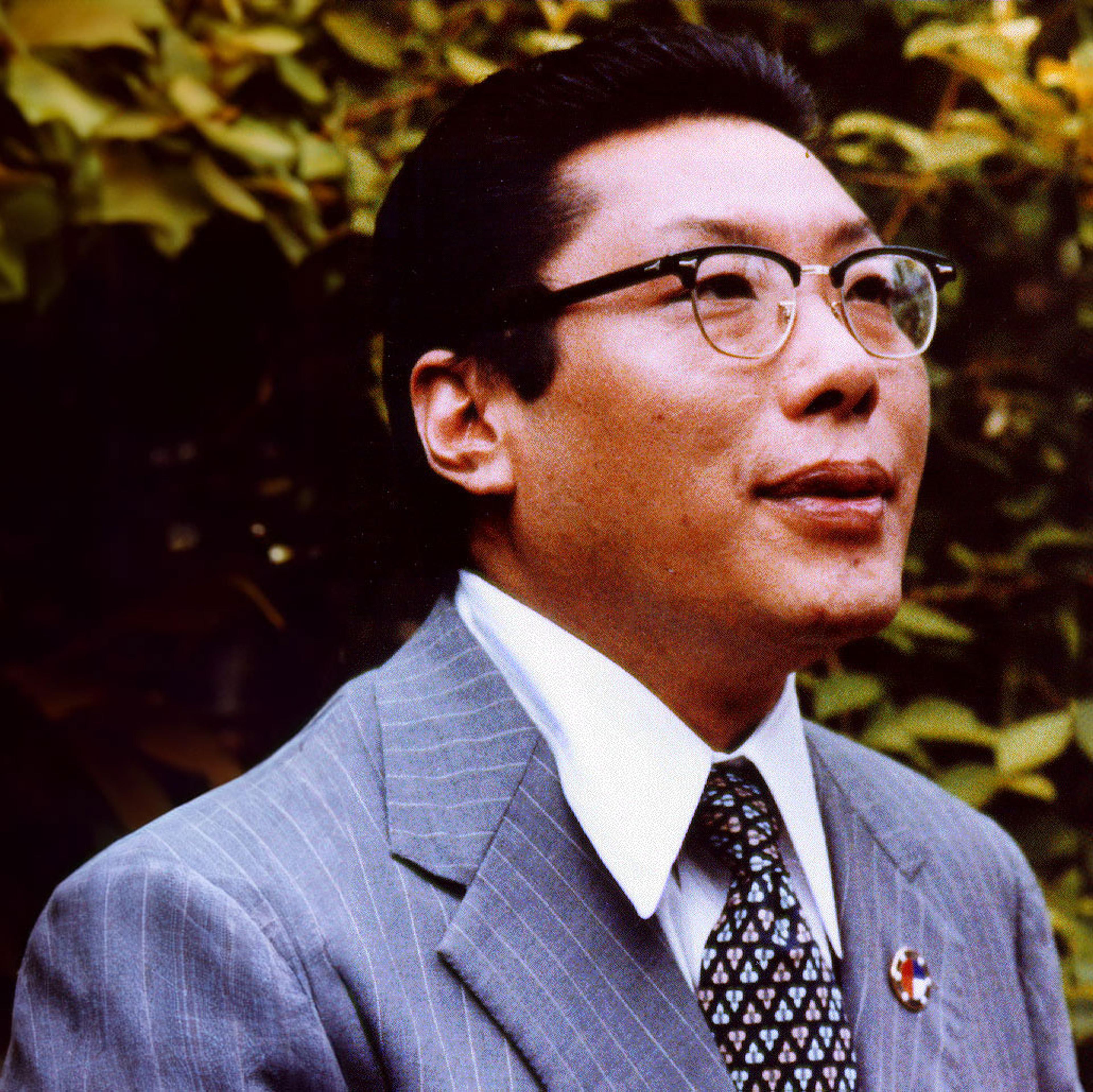
His Holiness Dilgo Khyentse Rinpoche presided over the cremation and the practices surrounding it. He did so not only as one of the most revered masters of his generation, but as a teacher whose lifelong connection with Trungpa Rinpoche was rooted in deep friendship and mutual commitment. Years earlier, the two had made a promise to one another: whichever passed first, the other would care for his students.
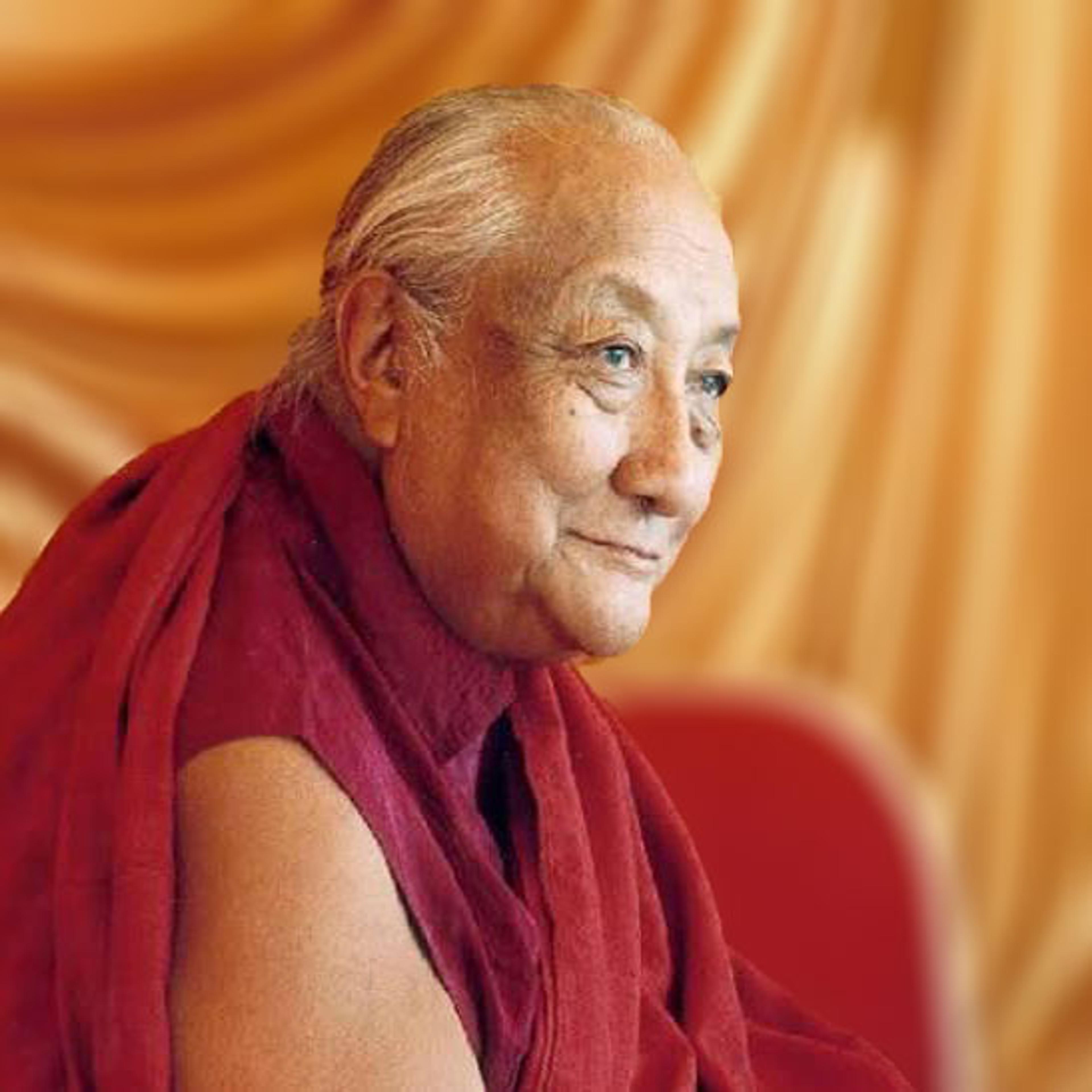
Dilgo Khentse Rinpoche
In the difficult months that followed, Dilgo Khyentse Rinpoche fulfilled that promise with extraordinary generosity, offering guidance, steadiness, and blessing to a grieving community. Together with the Kagyu teachers present, he made a decision that would shape the future of this place. Rather than dismantling the Purkhang, as tradition would normally require, he asked that it remain standing and one day be completed as a stupa.
This project is, in many ways, the fulfillment of that wish.
It is an offering to the Vidyadhara, to Dilgo Khyentse Rinpoche, and to the generations of practitioners who have quietly cared for this sacred place ever since.
Over the years, many hands have helped preserve that vision. In 1989, Paul Kloppenburg, who built the original Purkhang, prepared plans for its completion and urged that it not remain unfinished. Venerable Tenga Tulku later provided detailed guidance for transforming the structure into a proper kudung chorten, including correcting its form, installing the sokshing, or life-force pole, and filling it with tsa tsas and other sacred contents. When the structure began showing signs of age, Raven Fennell undertook its restoration and, together with Tenzin Odzer of Nepal, renewed its sacred artwork. Raven has continued caring for the Purkhang with remarkable devotion for more than twenty-five years.
Now, as the fortieth anniversary of the Vidyadhara's Parinirvana approaches in April 2027, Karmê Chöling is taking up this long-held responsibility with renewed devotion and with the guidance of a teacher uniquely suited to bring it to completion.
Guided By A Living Tradition
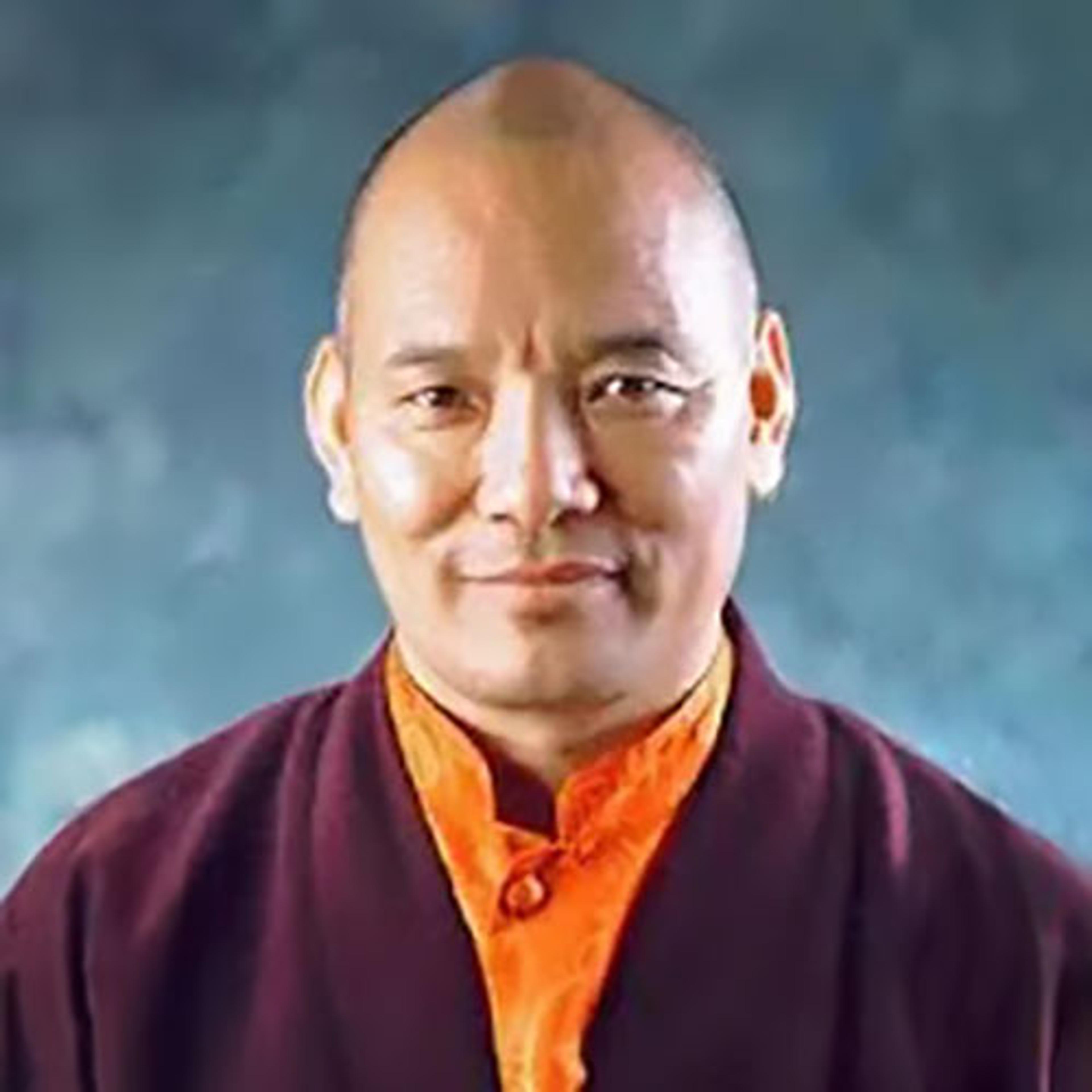
Lama Tashi Dondup
Karmê Chöling is deeply grateful that this work will be guided by a teacher uniquely suited to bring it to completion.
Lama Tashi Dondup, founder and Abbot of Karma Tekchen Zabsal Ling, was born in Lodrag, Tibet, in 1952. From 1970 to 1988 he trained at Rumtek Monastery in Sikkim, the seat of His Holiness the 16th Karmapa, where he received extensive instruction from some of the most respected masters of the Karma Kagyu lineage, including Jamgön Kongtrül Rinpoche, Khenchen Thrangu Rinpoche, Salje Rinpoche, and Khenpo Tsultrim Gyamtso. He completed the traditional three-year retreat at Rumtek, followed by a one-year Kalachakra retreat under the guidance of Kyabje Bokar Rinpoche. Among his lifelong areas of expertise are ritual music, torma, mandala construction, and the building and consecration of stupas.
In recent years, Lama Tashi Dondup has devoted himself to another remarkable undertaking: the creation of a garden of 132 stupas dedicated to primordial wisdom dharmakaya. Built to enshrine sacred relics and precious ritual objects entrusted to him over decades, the project reflects his lifelong devotion to preserving the Dharma through sacred architecture.
He often speaks of stupas not simply as monuments, but as living supports for practice. They offer future generations a place to make offerings, circumambulate, remember the teachings, and awaken devotion. Their purpose is not only to honor the past, but to benefit all who encounter them for years to come.
We are deeply honored that he has offered his guidance, knowledge, and wholehearted support to the completion of the Purkhang.
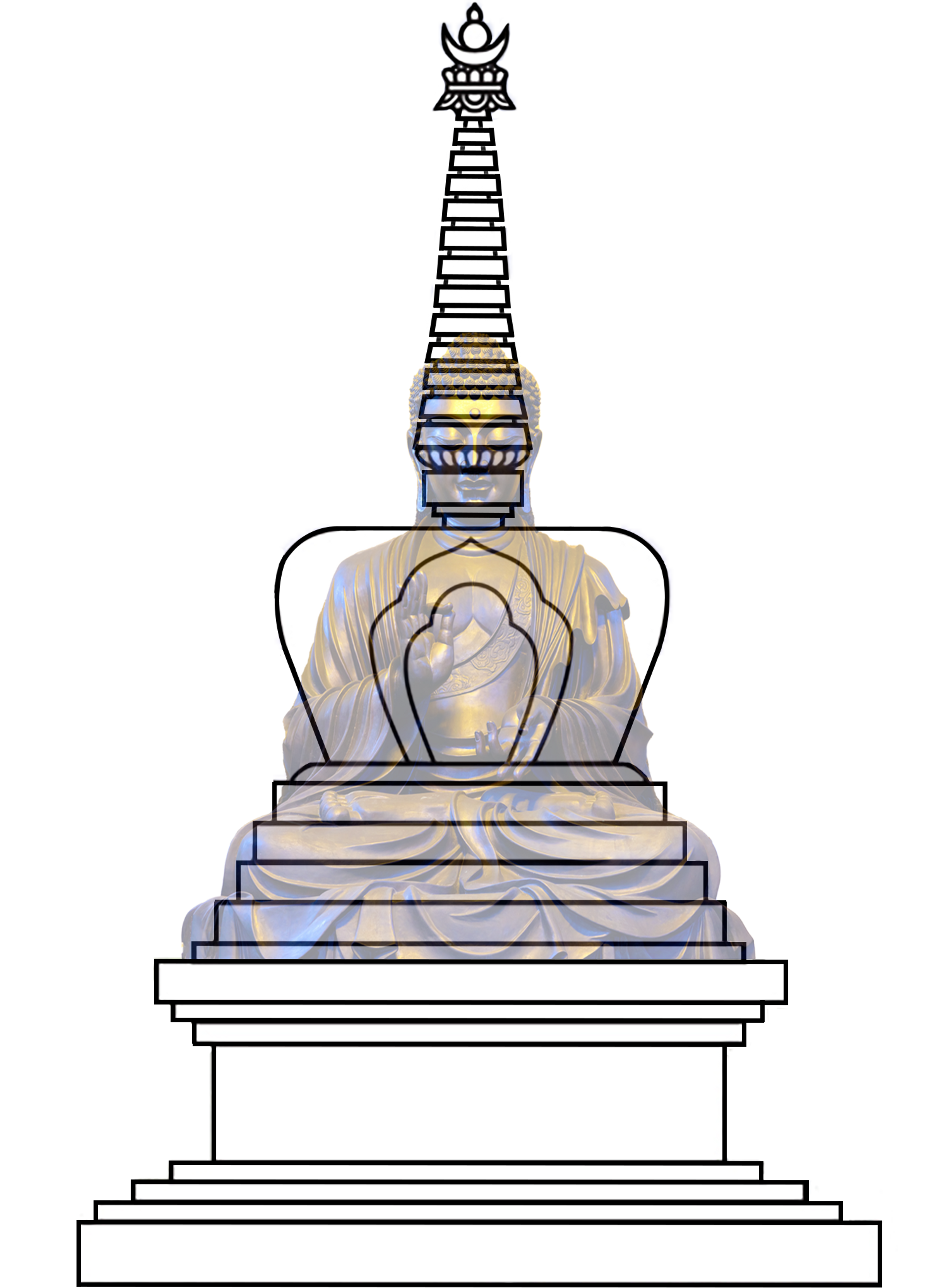
A Kudung Stupa
A kudung stupa is a sacred monument associated with the body and relics of a realized teacher. Filled with tsa tsas, mantras, relics, and other precious substances, it is carefully consecrated as a support for blessing, devotion, and lineage transmission.
More than a memorial, it becomes a living expression of awakened mind, a place where practitioners and visitors alike may make offerings, circumambulate, contemplate, and deepen their connection to the lineage.
Tendrel
In Tibetan, tendrel refers to auspicious interdependence, the way people, circumstances, timing, and intention come together when something is ready to happen. When the tendrel is strong, a project does not feel forced. The next step simply reveals itself, and what is needed seems to arrive at just the right moment.
That has been the character of this work from the very beginning.
Blessings, Guidance, & Help
Soon after Lama Tashi Dondup offered his blessing and guidance, people began hearing about the Purkhang before we had formally shared the project. Offers of help, sacred materials, transportation, prayers, and financial support began arriving almost immediately. Again and again, what was needed seemed already to be waiting nearby.
Sacred Life-force Pole
One of the clearest examples was the sokshing, the sacred life-force pole placed at the heart of every stupa. Lama Chopel, in Questa, New Mexico, had already completed one that matched the exact dimensions required for the Purkhang. He offered it as a gift. We traveled to New Mexico, received it with gratitude, and brought it home to Vermont, where it now awaits installation.
Gifts From Khenpo Karthar Rinpoche
Just recently, a complete set of the Kangyur, the translated teachings of the Buddha, and the Tengyur, the commentaries of the great Indian masters, was offered to the project. Each volume had been personally catalogued and labeled by the late Khenpo Karthar Rinpoche, originally recommended to oversee the Purkhang be properly completed and consecrated. Those volumes now rest safely here at Karmê Chöling, waiting to become part of this offering.
Financial Support
Longtime sangha member Gerry Hasse, through Friends of the Tail of the Tiger, was among the first to step forward with financial support, another quiet expression of confidence that this work had found its moment.
Aloka
To support the work ahead, we've begun transforming Aloka, once a storage room, into a simple workshop where Lama Tashi Dondup and the monastics joining him can prepare sacred materials and offerings. Fresh paint, repaired floors, space to work. Nothing elaborate. Simply a place made ready for what is unfolding.
A New Website
We're also in the midst of rebuilding Karmê Chöling's website and digital presence, a project that will take time to complete. But the tendrel surrounding the Purkhang has been so immediate, and the interest from the community so heartfelt, that we didn't want to wait.
This page is the first home for the project. A fuller website, with more history, photographs, and additional ways to participate, will grow alongside the work itself. For now, we simply wanted to let the community know that this long-awaited undertaking has begun.
None of these developments was carefully orchestrated
They unfolded naturally, one after another. A teacher with precisely the right experience. A sokshing already crafted to the proper dimensions. Sacred texts connected to one of the very teachers who helped guide this project decades ago. A room becoming available just as a dedicated workspace was needed. People from across the lineage finding one another and offering exactly what they had to give.
A Lineage, Reconnecting
When you look closely at the people who have touched this project across four decades, a remarkable pattern begins to emerge.
- Paul Kloppenburg, who built the original Purkhang.
- Venerable Tenga Tulku, who offered guidance for completing it as a proper kudung chorten.
- Raven Fennell, who has quietly cared for and protected it for more than twenty-five years.
- Lama Chopel, whose sokshing had already been crafted to the exact dimensions needed.
- Khenpo Karthar Rinpoche, whose hand-labeled Kangyur and Tengyur now rest on this land.
- And Lama Tashi Dondup, whose training at Rumtek connects him directly to the living traditions that have shaped this lineage for generations.
Seen individually, these might appear to be separate moments in time.
Seen together, they tell another story.
Across forty years, teachers, practitioners, craftspeople, and friends have each carried one part of a promise. Some laid its foundations decades ago. Others have only recently found their way to Karmê Chöling. Yet each has arrived with exactly what was needed, at exactly the right time.
This is more than the completion of a structure.
It is the quiet work of a lineage recognizing itself again.
It is a community, both old and new, discovering that it has been walking toward the same moment all along.
As the Purkhang becomes a completed kudung stupa, it will stand not only as a place of remembrance, but as a living place of practice, devotion, and refuge for generations to come. And like the lineage itself, its story will continue to unfold through everyone who helps care for it.
5 Ways to Help Build the Stupa
There are many ways to become part of this project, whether you live nearby or on the other side of the world. Like every sacred undertaking, this one is being carried forward through many hands. Some offer time. Some offer prayers. Some contribute materials or expertise. Others choose to make a financial gift. Every offering, whatever its form, becomes part of the conditions that allow this work to continue. Dana is the practice of generosity, and generosity takes many forms.
1. Help Spread the Word
This project belongs to a much wider community than the people currently living at Karmê Chöling.
Please share it.
Send the project information to old dharma friends. Share it with people who practiced here decades ago. Tell people who studied with the Vidyadhara. Send it to your sangha, your practice group, or someone you think would simply understand why this matters.
You can copy and send this:
Karmê Chöling is undertaking the historic work of transforming the purkhang built for the 1987 cremation of Chögyam Trungpa Rinpoche into a filled and consecrated kudung stupa.
Nearly 40 years after the Vidyadhara’s cremation, we now have the extraordinary opportunity to help complete this sacred structure and transform it into a living place of practice, pilgrimage, blessing, and devotion for generations to come.
Please mark your calendar for the consecration on April 4, 2027, and consider making an offering toward the $200,000 needed to complete the project. If 200 people each gave $1,000, we would reach our goal.
There are many other ways to participate as well, including making tsa tsas, preparing mantras, donating sacred materials, volunteering, and helping spread the word.
This is a rare opportunity to become part of something that will remain on the land long after we are gone.
Learn more, donate, and find ways to participate here: Completing The Purkhang (https://www.karmecholing.org/visit/visitors-guide/the-purkhang)
2. Save the Date: April 4, 2027

Please mark your calendar now. The consecration of the stupa will take place on April 4, 2027, near the 40th anniversary of the Vidyadhara’s parinirvana.
We hope many people who have loved Karmê Chöling, practiced here, studied with the Vidyadhara, or simply feel connected to this project will return to the land for this extraordinary occasion.
This will be a historic moment in the life of Karmê Chöling and the culmination of months of practice, preparation, offerings, and collective effort.
More information about the consecration and surrounding events will be shared as plans develop.
3. Make a Financial Offering
Our fundraising goal for the project is $200,000. Put very simply, if 200 people each gave $1,000, we would be there. Of course, gifts of every size matter!
Much of the money raised will go toward supporting the monasteries, khenpos, lamas, monks, and other practitioners whose knowledge and labor are making the filling and consecration possible.
Funds will also help us:
- Purchase sacred and ritual materials that cannot be donated
- Bring teachers and practitioners to Karmê Chöling
- Provide travel and logistical support for those doing the work
- Hire a project coordinator to manage the tremendous number of moving pieces
- Professionally document this historic project and consecration
- Prepare the structure and surrounding area
- Establish a fund for the long-term care and maintenance of the stupa
Contributing financially is not simply paying for a construction project. In the Buddhist tradition, making it possible for a stupa to be created, filled, maintained, and consecrated is itself considered a profound offering.
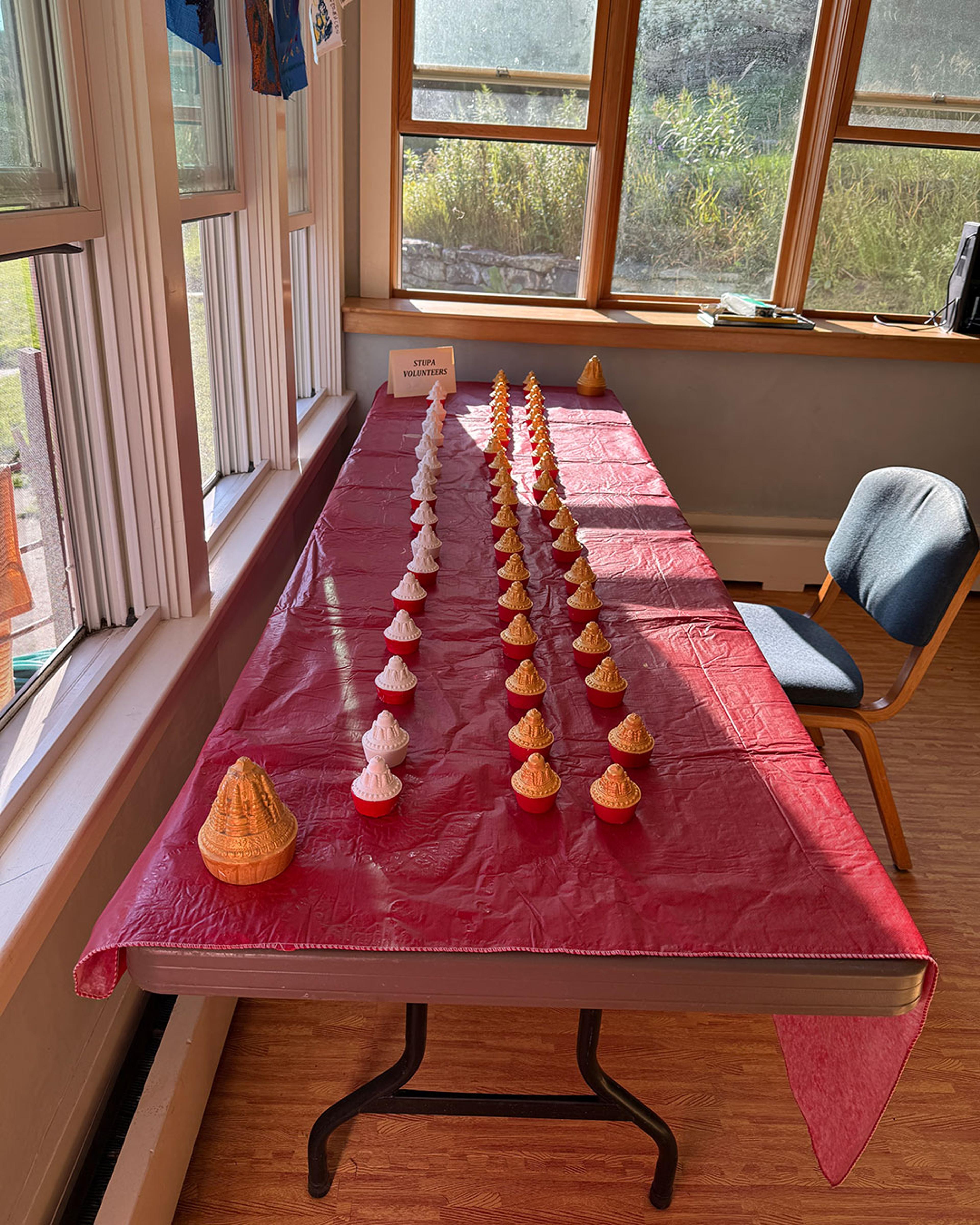
4. Come Make Tsa Tsas & Prepare Mantras
If you are local, or would like to make a pilgrimage to Karmê Chöling for a day or weekend, come participate directly. There will be hundreds of hours of quiet practice needed to prepare the tsa tsas and mantras that will fill the stupa. You do not need previous experience. We will train you. You do need to approach the work as practice: carefully, respectfully, and with a willingness to participate in the form being held.
Email stupa@karmecholing.org to join us.
5. Offer Sacred Materials
A stupa is traditionally filled with an extraordinary array of sacred, precious, medicinal, and auspicious substances.
We are currently seeking donations including:
- Jewelry / Gemstones
- Precious metals, including silver, copper, bronze, and gold
- Juniper
- Sandalwood
- Fine fabrics
- Saffron
- Tibetan incense
- Khatas
These offerings will become part of the stupa itself.
If you would like to donate materials, please first email stupa@karmecholing.org with an exact inventory of what you intend to send. This helps us keep careful records and determine what is still needed. Once confirmed, donations may be dropped off or mailed to:
Stupa Project
Karmê Chöling
369 Patneaude Lane
Barnet, VT 05821
Please include documentation of exactly what is in the package and who it came from, matching what was sent in the email.
And if you feel called to participate in some other way, we would love to hear from you. There are countless pieces of this project still taking shape, and people have already offered everything from specialized knowledge and materials to transportation, labor, ritual expertise, documentation, fundraising help, and simple willingness to show up.
Please email stupa@karmecholing.org and tell us specifically what you would like to offer.
The purkhang has stood on this land for almost 40 years.
Now we have the remarkable opportunity to work together to complete what was begun here in 1987 and to create something that can continue radiating blessing long after all of us are gone.
Every mantra rolled, every tsa tsa made, every jewel offered, every dollar given, every box carried, and every person who tells someone else about this project becomes part of the stupa.
This stupa will remain on the land for generations to come. May it be a place of remembrance, practice, blessing, and awakening for all who visit. Thank you for walking with us as this next chapter unfolds.

A little about Karmê Chöling …
Karmê Chöling is a Buddhist meditation retreat center founded by Chogyam Trungpa, a Tibetan lineage holder. Established in 1971, it is one of the oldest retreat centers in the US. It has become part of a global movement and community of meditators working together to build enlightened society.
Was this helpful?
Share This